Drywall Crack Repair
Hairline, diagonal and stair-step cracks from settling and small quakes: opened, taped, filled, blended.
Crack repair, step by stepSettling cracks, patchy texture, doorknob holes and dented corners: cut back, filled, sanded and blended so the repair disappears under the next coat of paint.
Call 7 days, 7am–9pm
Ring or message, and a drywall pro serving La Palma phones back to see the damage and price the fix.
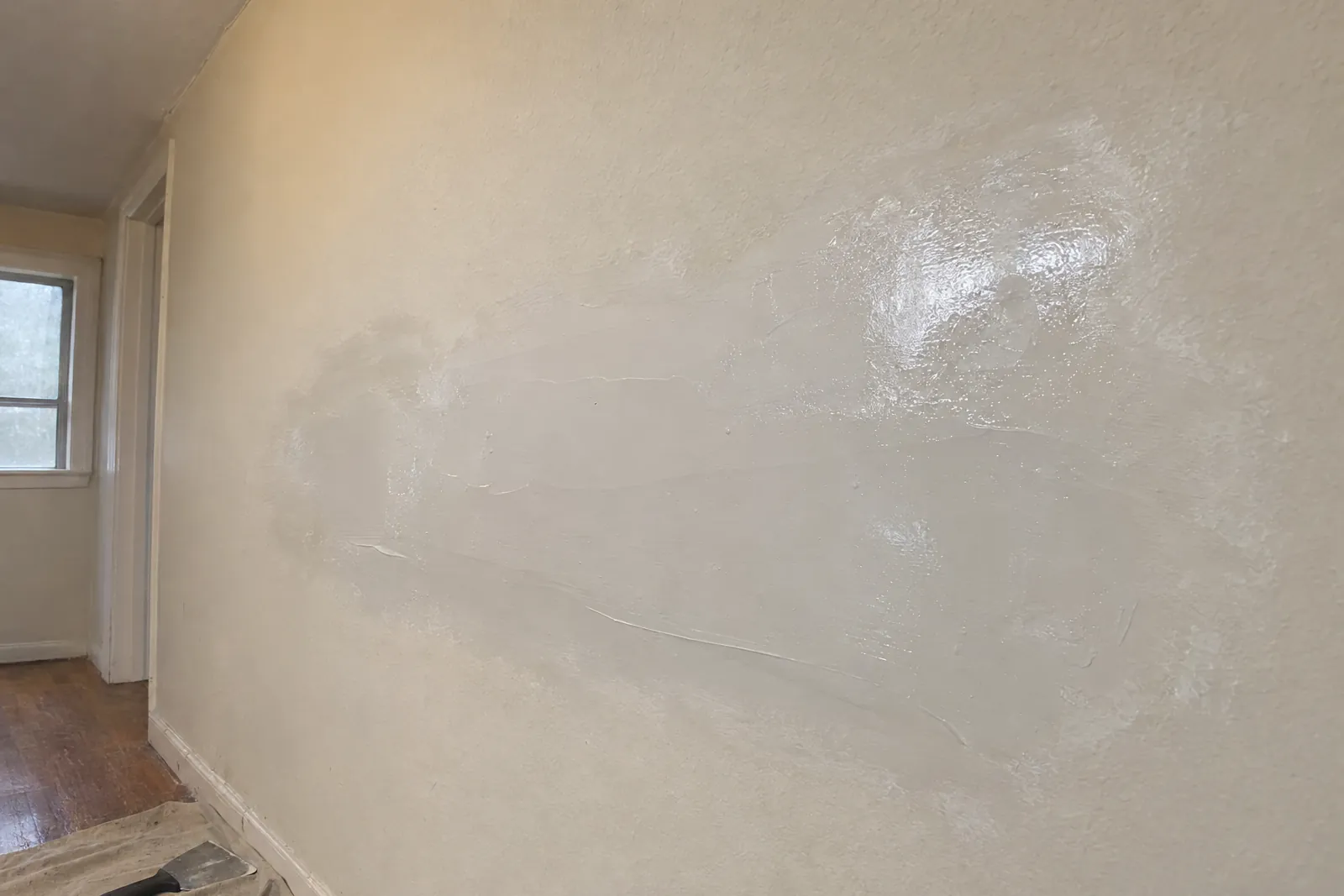
Drywall work throws fine dust and wet splatter. Most of it never reaches the rest of the house if ten minutes go into setup before the first cut. What goes down first:
Canvas or paper runner from the door to the work spot. Edges taped on hard floors so nothing slides. Carpet gets a self-adhesive film that grips the pile.
Move what moves. Cover what stays with plastic, tucked underneath so sanding dust can't drift in from below.
Supply and return grilles in the room taped over. Thermostat fan switched off during sanding so powder doesn't ride the ducts into the bedrooms.
Zip-door plastic or a taped sheet across the opening when the job runs several coats. Keeps pets and small kids out of wet compound too.
Fine sanding sponge or a vacuum-attached sander on most patches. Less powder in the air, less wiping afterward.
Vacuum, never a broom. Sills and baseboards wiped. Covers folded inward as they come up so the dust leaves with them.
Four kinds of drywall repair cover nearly every call from La Palma homes. Each page lists the cause, the fix and what to check before anyone opens the wall.
Sheetrock repair in older rooms often mixes two of these, like a ceiling seam crack with a water ring beside it. One visit can cover both.
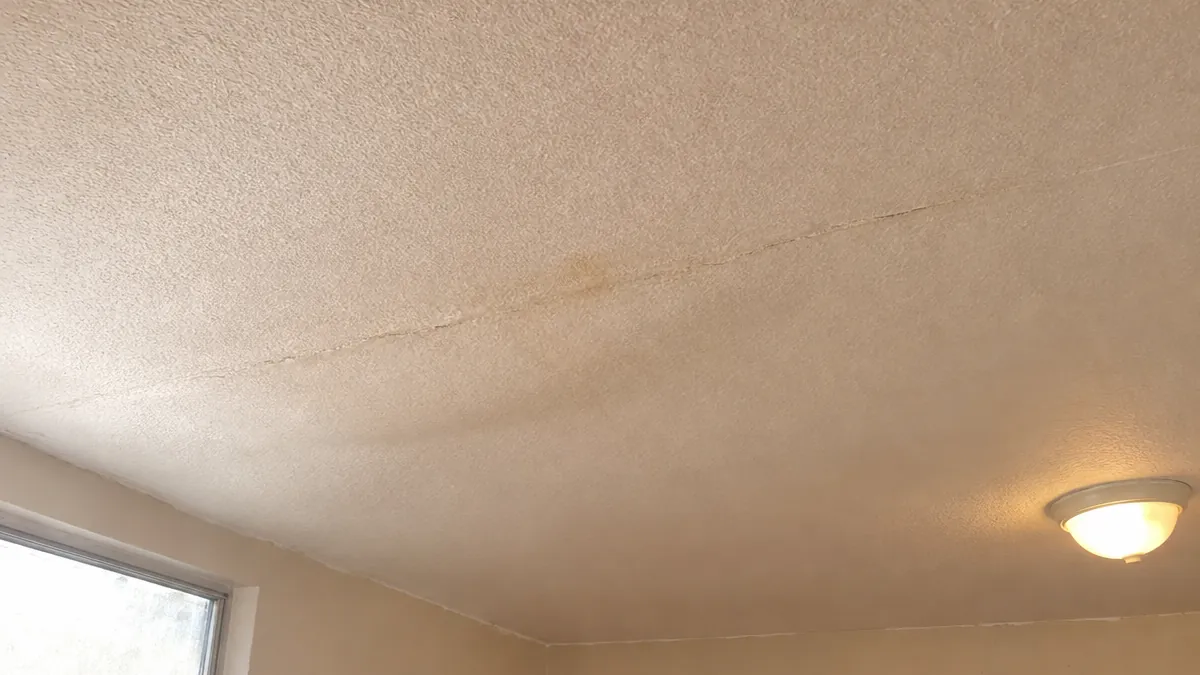
Hairline, diagonal and stair-step cracks from settling and small quakes: opened, taped, filled, blended.
Crack repair, step by stepOrange peel, knockdown and sprayed acoustic ceilings matched so a patch stops reading as a patch.
How a texture gets matchedDoorknob punches, anchor pulls, furniture dings and crushed outside corners, rebuilt flush.
Fixing holes and dentsStained, soft or sagging sections cut out and replaced after the leak is fixed and the cavity dries.
Repairing water-damaged ceilingsRoughly a third of occupied homes in La Palma were rented at the 2020 census. Move-outs leave anchor holes, scuffed corners and the odd fist-sized dent. Notes for owners and property managers:
List every hole, crack and gouge, room by room. Photograph each one with a ruler in frame for scale. One list, one quote, ideally one visit per coat.
Patches in four rooms dry on the same clock as a patch in one. Grouping them cuts return trips for second and third coats.
Choose days when the tenant can clear a path to each wall. Give whatever notice the lease calls for, and pass the visit times along.
Lockbox or key pickup? Say so on the first call so coats can be planned around it without someone waiting at the door.
Write down the color and sheen used on turnovers. Patches get primed; the finish coat goes faster when the color is already known.
A patch disappears only when every layer matches what is already in the wall. Three things to match: board thickness, compound type, surface texture.
Most interior walls in houses of this era are half-inch gypsum board. Garage walls shared with the house often use thicker fire-rated board. The patch piece is cut from the same thickness so it sits flush.
Powder mixed with water, hardens by chemical reaction. Used for deep fills and first coats because it shrinks less and holds tape firmly.
Bucket compound for the last thin coats. Sands smoother and feathers out wider.
Paper tape on seams and inside corners. Mesh with setting compound on small patches where strength matters more than a perfectly flat face.
Orange peel is a fine spatter of small bumps. Knockdown is heavier spatter flattened with a wide blade as it starts to set. Matching either one comes down to the mix, the spray pressure and the timing of the knock.
Common on ceilings from the 1960s and 1970s. An older acoustic ceiling needs testing before it is scraped, sanded or cut. Once that is settled, the patch is sprayed with an acoustic product to match the surrounding texture.
Two minutes with a phone camera and a tape measure shortens the first conversation and gets the quote closer to right.
Three ways to fix damaged drywall. Pick by size, location and what is behind the board.
| Criteria | Spot patch | Cut out and replace | Skim coat |
|---|---|---|---|
| Fits | Holes up to a few inches, short cracks, nail pops | Soaked or sagging board, holes bigger than a hand | Walls with many small dings, torn paper, old patch lines |
| Wall opened | None, or a small square | Back to the studs or joists | None |
| Compound coats | Two or three | Taping plus three or more | Two or more thin coats over the whole face |
| Texture after | Blended into the area around the patch | Sprayed over the new section, feathered out | Reapplied across the whole wall |
| Paint after | Primer on the patch, then a section or the wall | Primer, then usually the whole ceiling or wall | Full primer and paint |
| Mess | Lowest | Most | Moderate, mostly sanding |
La Palma covers less than two square miles, so the service area runs well past the city limits. The map plots each town from its published coordinates.
Street-by-street notes are on the towns served around La Palma page.
La Palma went from dairy land to suburb in one push. Two facts about its housing explain most of the wall trouble seen here.
The city incorporated as Dairyland in 1955 and voters renamed it La Palma in 1965, the same year its first residential subdivisions opened. So most houses here were built after that. Expect drywall on wood framing, taped seams, sprayed wall textures and acoustic ceilings in many rooms, plus several decades of settling at door and window corners.
At 1.80 square miles it is the smallest city in Orange County by area, and the 2020 count found 5,270 homes. Similar floor plans tend to crack in similar spots: above interior doors, at window corners, along the long ceiling seam in the main room.
Expect several short visits; wet mud sets the pace. Usual order:
Each stage, phone call through primer, is laid out on how these repairs run.
A new outlet, a moved thermostat, a plumbing fix behind a vanity: each leaves an opening. Once the trade is finished and any inspection is signed off, the wall gets closed and blended.
Old-work box cut-outs, fish holes along a wire run, abandoned box openings. Small holes get a backed patch; a long chase gets a strip of new board.
Access squares behind tubs, under sinks, at shutoff valves. If you want to reach that valve again later, ask about a removable access panel instead of a sealed patch.
Openings from moved registers, new return paths or a relocated thermostat. The old hole is framed, filled and textured.
Cable, alarm, doorbell and camera runs. Usually small holes; texture matching is most of the work.
Book the patch after the inspection. A wall closed before an inspector has seen it may need opening again.
The weather here is mild, but it still marks walls and ceilings. The strip shows average monthly precipitation at Long Beach Airport, west of town, from the 1991–2020 normals.
The wettest stretch: close to three inches a month in January and February. Roof flashing, skylight and window leaks show up as tan rings on ceilings and stains below sills. Stop the leak, dry the area, then repair.
Almost no rain. A stain that appears in summer is more likely from a supply line, an AC condensate drain or a water heater than from the roof.
Average relative humidity at the same station sits in the 60s every month (NOAA 1961–1990 figures). Compound dries slower on cool, damp mornings, so coat timing allows for it.
Small earthquakes and settling keep no calendar. After a shake, check door corners, stairwells and long ceiling seams for new hairlines.
Wondering what a stained ceiling will involve? The guide to what drives repair cost lists every factor.
Call, or fire off a snapshot of the damage by text. Say what it is, where it is and roughly how big. Next, a drywall repairer from the area stops by to size it up, and the price is settled before a single cut.
Call 7 days, 7am–9pm
One call gets a local repair pro out to measure up and quote before anything is cut.